

Introduction
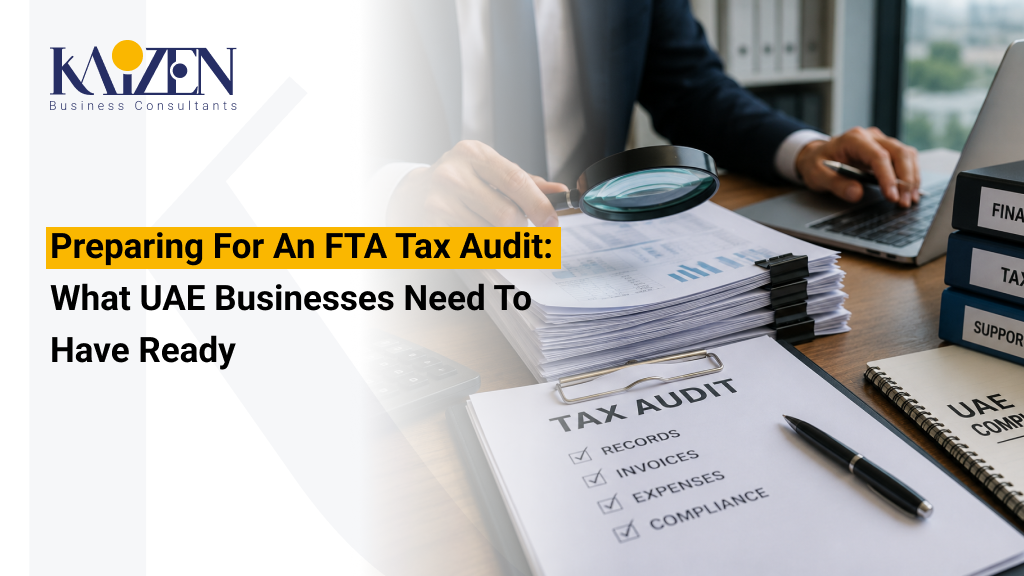
An FTA tax audit notice tends to arrive with relatively little warning, and the businesses that come through the process smoothly are almost always the ones that were already prepared before the letter landed. This is not about scrambling to reconstruct records once an audit begins. It is about maintaining the kind of documentation and internal readiness that means an audit, when it comes, is simply a matter of producing what already exists. This guide sets out exactly what UAE businesses should have in place at all times.
What Triggers an FTA Audit?
The FTA does not publish a fixed list of audit triggers, but based on patterns we see across our client base, certain factors tend to increase the likelihood of being selected for review:
- Significant or unusual fluctuations in VAT recoverable positions between periods
- Consistently claiming VAT refunds rather than making payments
- Mismatches between figures reported on Corporate Tax and VAT filings for the same period
- Operating in a sector the FTA is actively focusing on during a given compliance cycle
- A history of late filings, late payments, or previous voluntary disclosures
- Random selection as part of the FTA’s routine compliance monitoring programme
Because audits can be triggered without any specific wrongdoing on the business’s part, being audit ready is a baseline expectation for every UAE business, not just those that suspect they have made an error.
Core Documentation Every Business Should Maintain
- Complete accounting records covering the full retention period, currently a minimum of five years
- All tax invoices issued and received, meeting the mandatory content requirements set by the FTA
- Bank statements for all business accounts, reconciled against the accounting records
- Copies of all filed VAT and Corporate Tax returns, along with the calculations supporting each figure reported
- Contracts and agreements underpinning significant transactions, particularly with related parties
- Import and export documentation, including customs declarations where applicable
- Payroll records and WPS salary information files
- Fixed asset registers with supporting depreciation calculations
What an FTA Auditor Typically Reviews
VAT Specific Checks
- Reconciliation of VAT returns against the general ledger and sales records
- Correct classification of standard rated, zero rated, and exempt supplies
- Reverse charge treatment on imported goods and services
- Input VAT recovery on expenses, checking for blocked or partially recoverable categories
- Tax invoice compliance across a sample of transactions
Corporate Tax Specific Checks
- Whether financial statements are prepared in accordance with IFRS or IFRS for SMEs
- Accuracy of adjustments made to accounting profit to arrive at taxable income
- Related party transactions and supporting transfer pricing documentation
- Correct application of any exemptions or reliefs claimed, such as Small Business Relief
- Free zone entities, whether Qualifying Free Zone Person conditions are genuinely being met
The Response Timeline Matters
Once an audit notice is issued, the FTA typically specifies a timeframe within which documentation must be produced. Businesses that are not organised often need to spend the early part of that window simply locating records, rather than reviewing and presenting them properly. This compressed timeline is where poorly maintained bookkeeping causes the most damage, not because the underlying transactions were necessarily wrong, but because the business cannot produce clear evidence to support its position quickly enough.
Steps to Take Before an Audit Ever Happens
- Conduct a VAT health check and Corporate Tax review at least annually, independent of routine return preparation
- Maintain cloud based accounting records with clear, consistent transaction coding
- Keep supporting documentation attached to or clearly linked with each transaction, rather than stored separately
- Review related party transactions specifically for arm’s length pricing and documentation
- Assign clear internal or outsourced responsibility for responding to any FTA correspondence promptly
- Correct any known errors through voluntary disclosure rather than waiting for an audit to surface them
What to Do If You Receive an Audit Notice
- Read the notice carefully to understand exactly what period, tax type, and documentation is being requested
- Do not ignore or delay responding, since missed deadlines can trigger separate penalties on top of any audit findings
- Engage your tax advisor immediately, before assembling or submitting any documentation
- Conduct an internal review of the specific area under audit before responding, so you understand your position before the FTA does
- Respond only with what has been specifically requested, in an organised and complete manner
How Kaizen Can Help
Our Tax Consulting Services in Dubai include audit readiness reviews that stress test your VAT and Corporate Tax position before the FTA ever gets involved. If an audit notice does arrive, our team manages correspondence and documentation preparation on your behalf, working from records maintained by our bookkeeping service providers in the UAE team where we also handle your accounting.
Speak to Kaizen about an audit readiness review before an FTA notice makes it urgent.